
Frost Line Depth By ZIP Code
The depth your building code requires, who sets it, and the document it comes from.
- 721 verified values
- Every value linked to its source
- Free, no sign-up
How do you find the frost line depth for your ZIP code?
Enter your ZIP code and the lookup matches it to the city or county that issues building permits there. It then shows the frost line depth written in that place’s adopted building code, or the state rule where the state sets one. Your building department has the final word.
- 1
Enter your ZIP code
Matched to Census ZIP areas and the counties they touch.
- 2
We find the authority
The city, county or state that issues your building permit.
- 3
We read its code
The frost line depth written in its adopted code, with a link.
- 4
You see how sure it is
Verified, state-set, or no official local value.
Why can one ZIP code have two frost line depths?
A ZIP code is a mail route, not a building jurisdiction. In the Census Bureau’s 2020 ZIP-area file, nearly a quarter of ZIP areas (23%) have at least 5% of their area in a second county, and many more cross a city limit. When your ZIP code covers more than one authority, the lookup names each one so you can check which issues your permit.

Frost line depth by state
Each state handles frost line depth differently: a few set one number, some set it by county, and most leave it to each city or county code. Tap a state, or open the frost line map.
- AL12″
- AK42″
- AZ0–30″
- AR12–18″
- CA0–30″
- CO30–48″
- CT42″
- DE24–32″
- DC30″
- FLnone
- GA5–12″
- HIlocal
- ID24–36″
- IL36–42″
- IN24–36″
- IA42″
- KS24–36″
- KY24–33″
- LA12″
- MElocal
- MD18–36″
- MA48″
- MI42″
- MN42–60″
- MSlocal
- MO30–36″
- MT36″
- NE36–42″
- NV12–24″
- NH48″
- NJ30–36″
- NM6–16″
- NY42–48″
- NC12″
- ND48″
- OH30–42″
- OK16–18″
- OR12–24″
- PAlocal
- RI40″
- SC0″
- SD42″
- TN5–13″
- TX0–12″
- UT30–36″
- VTlocal
- VA12–24″
- WA12–24″
- WVlocal
- WI48″
- WY36–42″
Set by each city or county; no verified value yet
View as a table
| State | Verified range | How it is set |
|---|---|---|
| Alabama | 12 in | Set by each local code · 4 of 40 places verified |
| Alaska | 42 in | Set by each local code · 2 of 4 places verified |
| Arizona | 0–30 in | Set by each local code · 12 of 36 places verified |
| Arkansas | 12–18 in | Set by each local code · 2 of 26 places verified |
| California | 0–30 in | Set by each local code · 32 of 209 places verified |
| Colorado | 30–48 in | Set by each local code · 8 of 15 places verified |
| Connecticut | 42 in | Statewide code table · 11 of 11 places verified |
| Delaware | 24–32 in | Set by each local code · 2 of 2 places verified |
| District of Columbia | 30 in | One statewide depth · 0 of 0 places verified |
| Florida | No frost line | No frost line in state code · 111 of 111 places verified |
| Georgia | 5–12 in | Set by each local code · 4 of 75 places verified |
| Hawaii | — | Set by each local code · 0 of 0 places verified |
| Idaho | 24–36 in | Set by each local code · 7 of 14 places verified |
| Illinois | 36–42 in | Set by each local code · 19 of 72 places verified |
| Indiana | 24–36 in | State table by county · 56 of 56 places verified |
| Iowa | 42 in | Set by each local code · 7 of 29 places verified |
| Kansas | 24–36 in | Set by each local code · 2 of 8 places verified |
| Kentucky | 24–33 in | Statewide zones by county · 21 of 21 places verified |
| Louisiana | 12 in | Set by each local code · 1 of 34 places verified |
| Maine | — | Set by each local code · 0 of 12 places verified |
| Maryland | 18–36 in | Set by each local code · 5 of 7 places verified |
| Massachusetts | 48 in | One statewide depth · 39 of 39 places verified |
| Michigan | 42 in | One statewide depth · 63 of 63 places verified |
| Minnesota | 42–60 in | Statewide zones by county · 10 of 10 places verified |
| Mississippi | — | Set by each local code · 0 of 18 places verified |
| Missouri | 30–36 in | Set by each local code · 3 of 12 places verified |
| Montana | 36 in | Set by each local code · 2 of 8 places verified |
| Nebraska | 36–42 in | Set by each local code · 2 of 8 places verified |
| Nevada | 12–24 in | Set by each local code · 5 of 7 places verified |
| New Hampshire | 48 in | Set by each local code · 2 of 6 places verified |
| New Jersey | 30–36 in | Statewide zones by county · 4 of 4 places verified |
| New Mexico | 6–16 in | Set by each local code · 3 of 17 places verified |
| New York | 42–48 in | Set by each local code · 5 of 68 places verified |
| North Carolina | 12 in | Statewide code table · 83 of 83 places verified |
| North Dakota | 48 in | Set by each local code · 2 of 3 places verified |
| Ohio | 30–42 in | Set by each local code · 8 of 81 places verified |
| Oklahoma | 16–18 in | Set by each local code · 4 of 24 places verified |
| Oregon | 12–24 in | Statewide zones by county · 23 of 23 places verified |
| Pennsylvania | — | Set by each local code · 0 of 5 places verified |
| Rhode Island | 40 in | One statewide depth · 0 of 0 places verified |
| South Carolina | 0 in | Set by each local code · 1 of 14 places verified |
| South Dakota | 42 in | Set by each local code · 2 of 4 places verified |
| Tennessee | 5–13 in | Set by each local code · 13 of 60 places verified |
| Texas | 0–12 in | Set by each local code · 31 of 169 places verified |
| Utah | 30–36 in | Set by each local code · 14 of 26 places verified |
| Vermont | — | Set by each local code (state code covers other buildings) · 4 of 4 places verified |
| Virginia | 12–24 in | Set by each local code · 10 of 23 places verified |
| Washington | 12–24 in | Set by each local code · 27 of 48 places verified |
| West Virginia | — | Set by each local code · 0 of 13 places verified |
| Wisconsin | 48 in | Statewide minimum · 53 of 53 places verified |
| Wyoming | 36–42 in | Set by each local code · 2 of 3 places verified |
What do you do with your frost line number?
Your frost line number sets the minimum depth for anything that must not move when the ground freezes and swells.
-
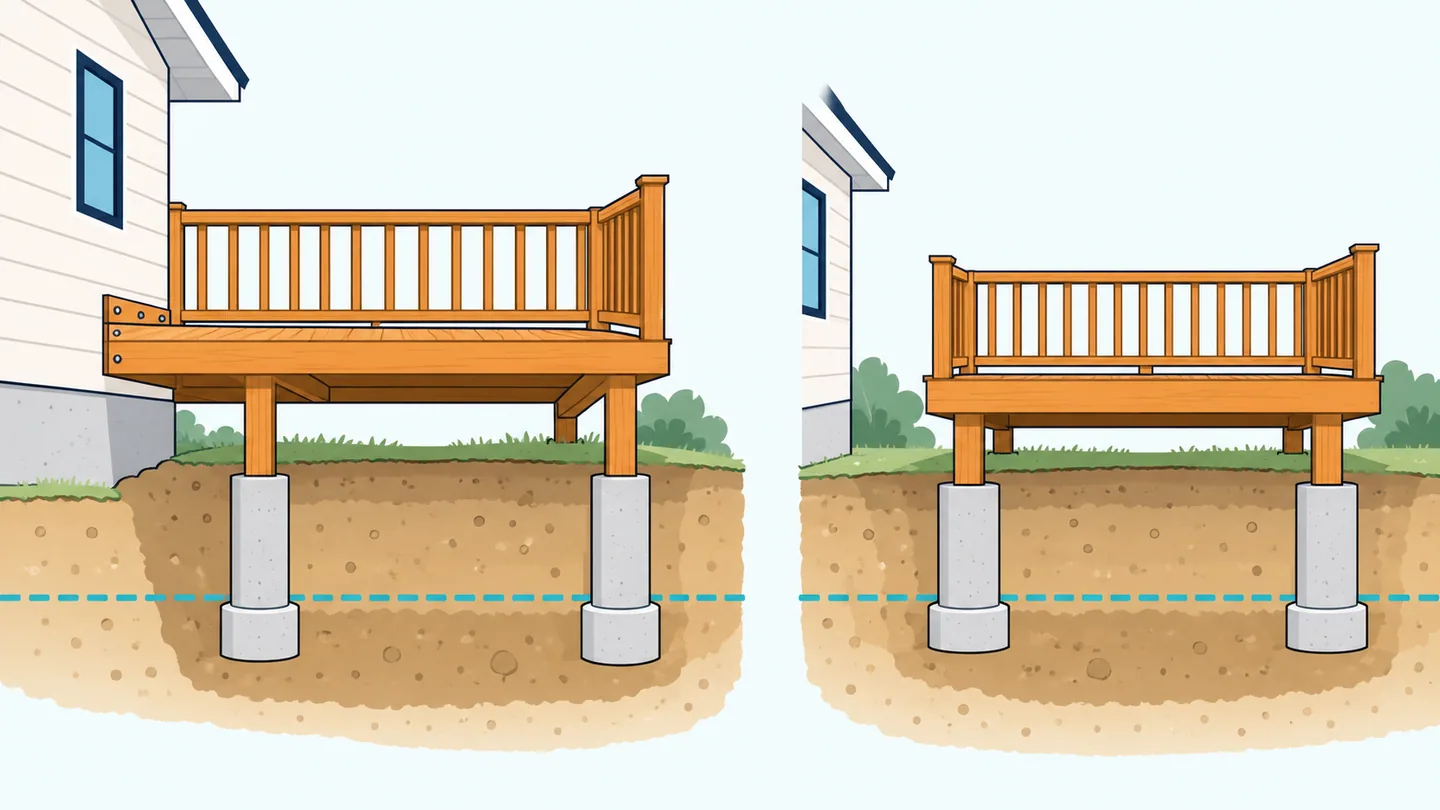
Deck Footings
Footings for a deck attached to the house go below the frost line, and at least 12 in down.
-
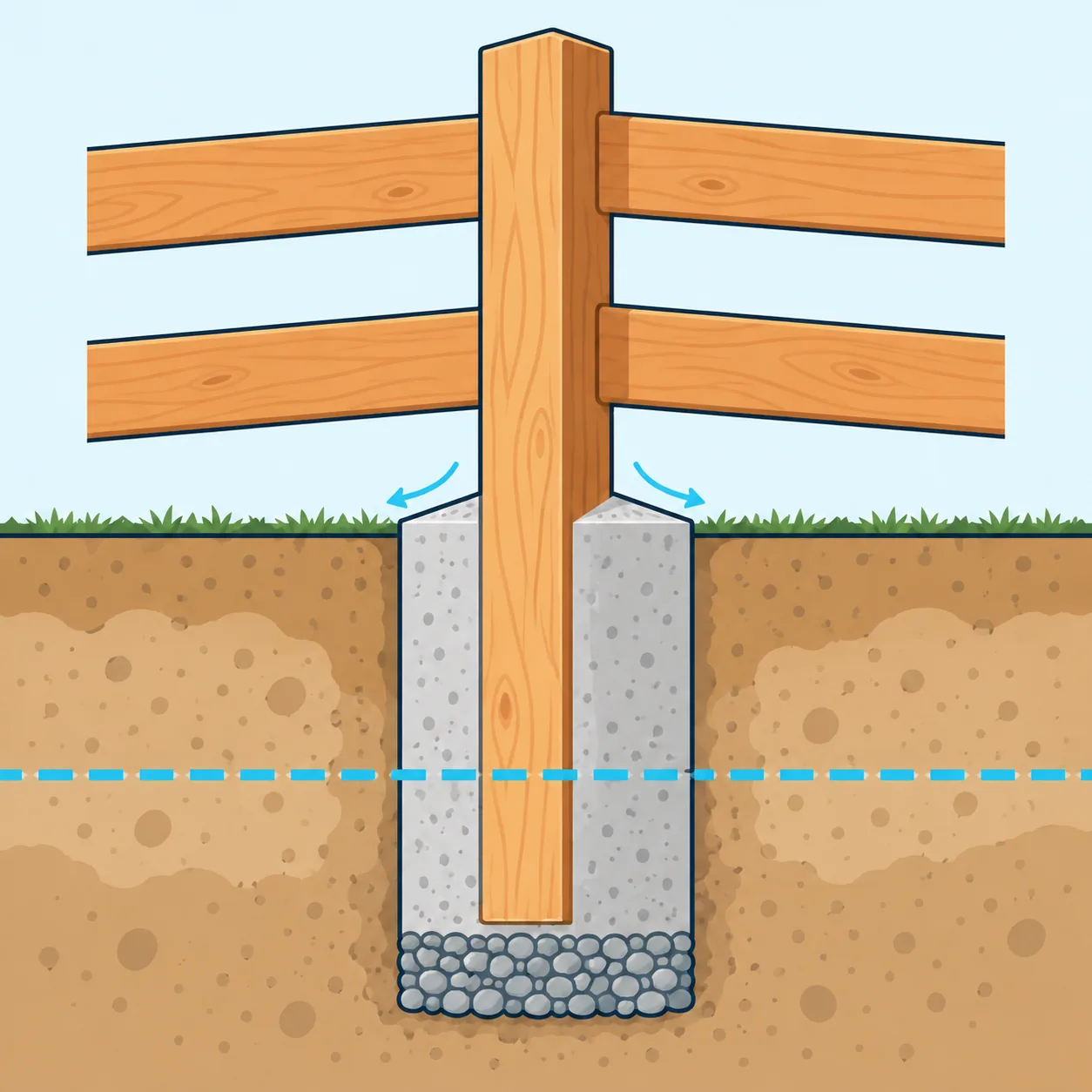
Fence Posts
Bury about half the fence height, and go to the frost line when posts are set in concrete.
-
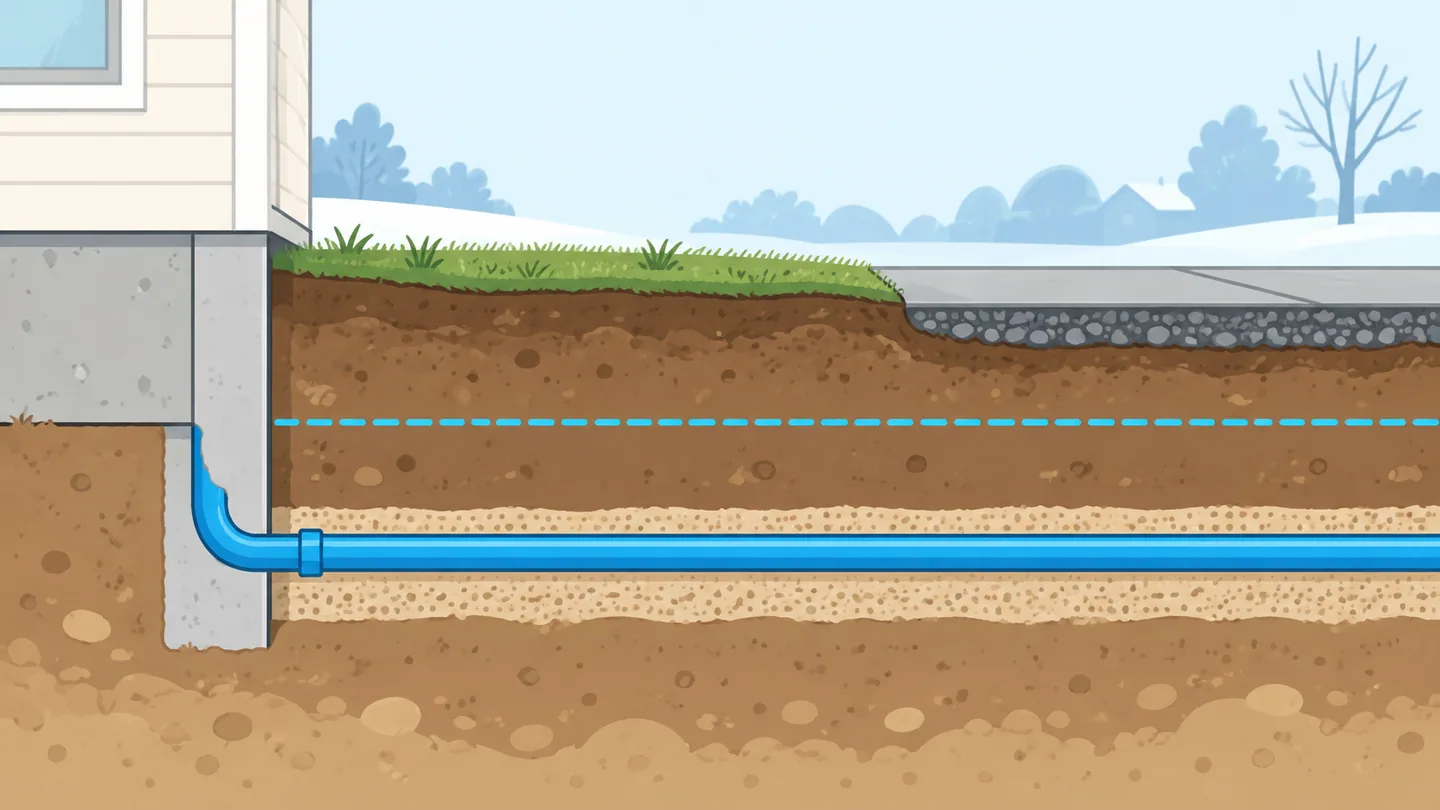
Water Lines
Bury the service line 6 in below the frost line, and at least 12 in deep.
-
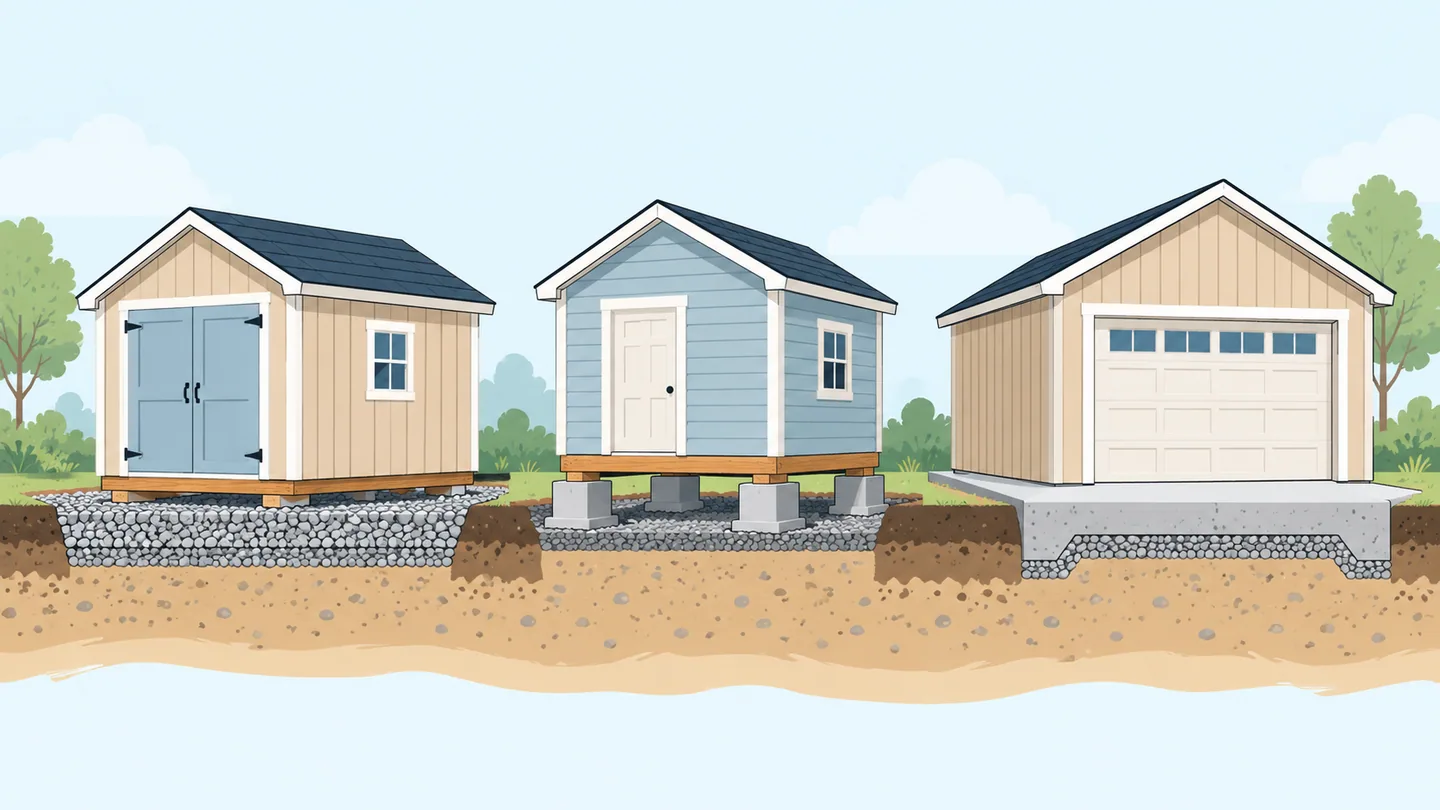
Sheds
Detached sheds up to 600 sq ft can skip frost footings (IRC R403.1.4.1).
Building something else? The footing depth guide covers porches, garages, gazebos, pole barns, slabs and more, and the water line guide covers sewer, septic, irrigation and utility lines. For the code itself, read the IRC frost depth rules.
Is the frost depth map from the weather service the same as your frost line?
No. The National Weather Service frost depth map shows how deep the ground is frozen this week at its stations. Your frost line is the minimum footing depth set by the building code, and it stays the same every year.
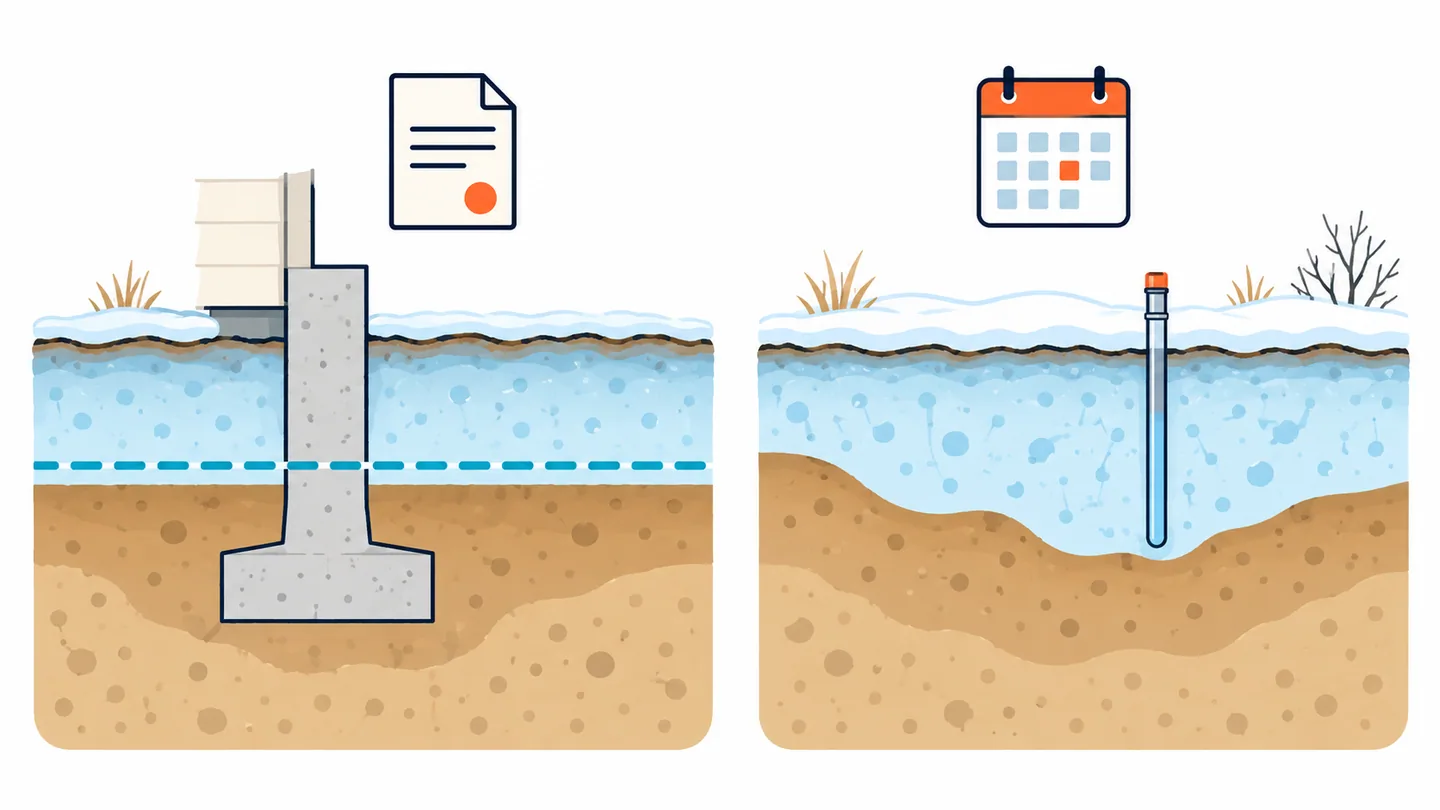
Code Frost Line
- Who sets it
- Your building authority
- What it measures
- Minimum footing depth
- Changes
- When the code is amended
- Use it for
- Permits, footings, posts, pipes
Weather Frost Map
- Who sets it
- National Weather Service stations
- What it measures
- Frozen ground right now
- Changes
- Daily in winter
- Use it for
- Timing digging and thaw
How do we check each frost line depth?
Every value in the lookup comes from a published document: a city or county code, a state code table, or a state rule. We read the document, record where the value came from, and label each place with one of three tiers.
- Verified official values
- 721
- Local codes read
- 280
- Places covered
- 1,678
- Last checked
- Oct 2026
- Verified The place’s own code or the state rule sets this number.
- No official local value We show nearby official values and who to ask.
Frost line questions
Can I calculate frost depth myself?
Engineers estimate how deep frost reaches from the air freezing index, soil type and moisture, and the code’s design table has a column for that index. For a permit, though, the depth that counts is the one your building code sets, not a calculated estimate. Use the lookup above for that number.
What is a typical frost line depth in the United States?
Among the official values we have verified, building-code frost line depths run from 0 in, in places where the ground rarely freezes, to 60 in (Minnesota). Most fall between 12 and 48 in.
What is considered a deep frost line?
There is no official cut-off. Among the values we have verified, the deepest are 48 in (4 ft) or more, found in 7 states: Colorado, Massachusetts, Minnesota, New Hampshire, New York, North Dakota, Wisconsin.
What if my town has no official frost line depth?
Many towns follow their state’s code without publishing a local number. Call the building department, ask “What frost line depth do you use in Table R301.2(1)?”, and have the answer written on your permit drawing. Call 811 before you dig.
Check your frost line before you dig
Takes five seconds. Every answer links to the code it comes from.