
Does a Septic Tank Need to Be Below the Frost Line?
A septic tank usually does not need to sit entirely below the frost line. The water inside is warm, and soil and snow insulate it. The pipes and shallow drainfield lines are what freeze. This page explains which parts of a septic system freeze, what your state's septic rules decide, and how to keep a system from freezing.
- Checked October 2026
- 4 sources
- How we verify
- House sewer pipeUnder 4 ft deep may freezeNDSU Extension: if shallow where it leaves the house and not insulated, in a harsh winter.
- Snow as insulation10 in of snow ≈ R-18Fresh, fluffy snow, per NDSU Extension. Packed snow insulates less.
- Who sets septic depth rulesState and countyOnsite wastewater rules, not the building code.
Is a Septic Tank Safe Above the Frost Line?
A septic tank usually does not need to sit entirely below the frost line, because it holds warm water and soil and snow insulate it. The parts that freeze are the pipes and shallow drainfield lines. State and county onsite wastewater rules, not the building code, set the depths.
The IRC does touch the connection: P2603.5.1 leaves a blank for the depth of the building sewer at the point where it joins the septic tank, and the local code fills it in. Look up your frost line depth to see what your authority sets for the frost line.
Which Parts of a Septic System Freeze?
The pipes, distribution boxes and shallow drainfield lines freeze first, and the tank itself rarely does. NDSU Extension lists the usual failure points.
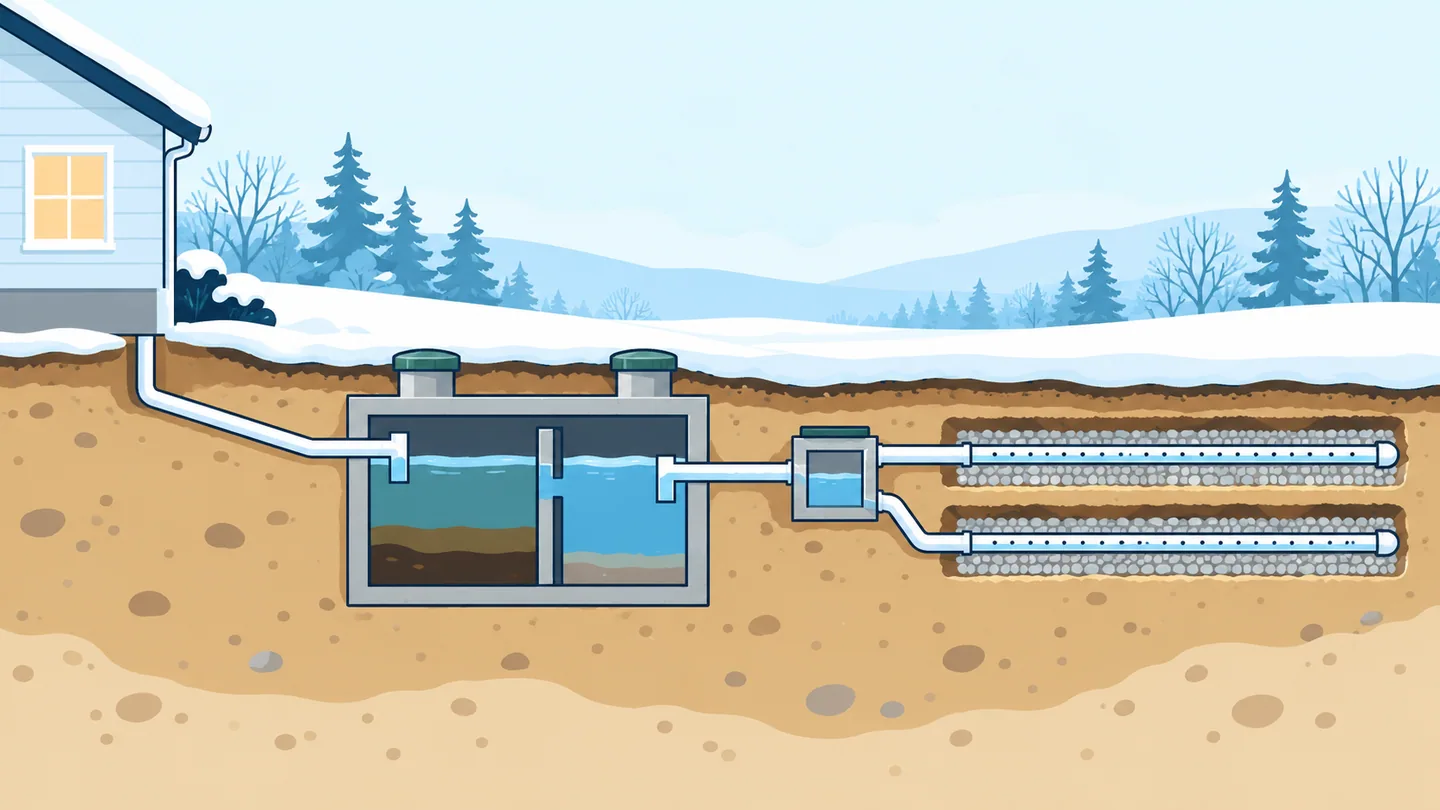
- The house sewer line where it leaves the basement wall. In a harsh winter, if the pipe is less than 4 feet below the surface there and has no added insulation, freezing is likely.
- The pipe from the tank to the drainfield, when it lacks slope, because slow-moving water cools and freezes.
- Distribution boxes for the drainfield laterals, where water can freeze.
- Sagging pipe, which creates a low spot where water collects and freezes. It often slumps beside the tank, where soil settles after construction.
The root causes NDSU names are dry soil, very cold air and no snow cover over a long stretch.
Do Septic Lines Need to Be Below the Frost Line?
Septic lines do not all need to be below the frost line, but the shallow ones are the ones at risk. A line that stays below frost, or is insulated or sloped to drain, is protected. Rules for pipe and drainfield depth are state and county rules, so ask your onsite wastewater authority.
Snow cover is the main variable. NDSU says ten inches of fresh, fluffy snow, which holds about 7 percent water, is about equal to a 6-inch layer of fiberglass insulation at R-18. Compacted snow insulates less, and more than 12 inches of snow gives significant frost protection.
How Deep Are Septic Tanks and Leach Lines Buried?
Tank and leach line depths are set by state and county onsite wastewater rules and by the system’s design, so no single figure applies. The tank’s depth depends on the inlet height, the site’s slope and the access risers, and the drainfield is shallow by design.
Ask your county health department or onsite wastewater authority for the rule, and have your designer confirm the depths on your permit drawing.
How Do You Keep a Septic System From Freezing?
Keep snow, insulation and use on your side, and keep traffic off.
- Leave snow in place over the tank, pipes and drainfield. A snow fence around the drainfield helps hold it.
- Add insulation where snow is thin. For a system used rarely in winter, NDSU suggests an insulating layer at least a foot deep over the tank, reaching at least 5 feet beyond its edges. Straw or mulch works.
- Insulate critical spots. An insulating layer over the house sewer line, the tank-to-field pipe and the distribution boxes likely prevents freezing, per NDSU.
- Keep traffic off. Minnesota Extension says to keep all traffic, even foot traffic and pets, off every part of the system, since compacted snow insulates less.
- Keep water moving. Regular use, especially warm water, helps. Spread laundry across the week, and do not leave water running.
- Pump the tank before winter, since too much sludge can cause winter problems, says NDSU.
Who Sets Septic Depth Rules?
State and county onsite wastewater regulations set septic depths and insulation, not the International Residential Code. The county health department usually issues the permit and inspects the system, and each state has its own technical rules.
Ask your county health department for the rule that applies, and for a list of licensed designers and installers.
What Should You Do if Your Septic System Freezes?
If your septic system freezes, turn off any pumps and call an onsite septic professional. Minnesota Extension advises that the piping will refreeze unless the underlying cause is corrected, so the fix is more than a thaw.
Do not leave water running continuously to try to thaw it, since Minnesota guidance cautions against that. Once the system is clear, add the insulation and snow cover above, and check for a sag or a shallow section.
Questions People Ask
Does a septic tank need to be below the frost line?
Not necessarily. The tank holds warm water and is insulated by soil and snow, so it often sits partly in the frost zone without freezing. Pipes, distribution boxes and shallow drainfield lines are the parts that freeze. Your state or county onsite rules set the required depths.
How can I keep my septic system from freezing?
Keep snow cover over it, add an insulating layer such as straw or mulch at least a foot deep where snow is thin, keep vehicles and foot traffic off it, and use warm water regularly. NDSU and Minnesota Extension give these steps.
What if my septic system freezes?
Turn off any pumps, and call an onsite septic professional. Minnesota Extension warns that unless the cause is corrected, the piping will refreeze.
What Is Your Frost Line Depth?
Enter a ZIP code or city to see the depth your own building code sets.