
How Deep Should a Frost-Free Yard Hydrant Be Buried?
A frost-free hydrant works by closing its valve below the frost line and draining the pipe above it, so the valve must sit deeper than your local frost depth. This page shows how to pick the bury depth from your frost line, how to build the gravel drain bed, how to install the hydrant, and why even a frost-free hydrant can freeze.
- Checked October 2026
- 3 sources
- How we verify
- Bury depth, per Boshart guidanceFrost line + 12 inAt least 12 in below the deepest frost line in your area. Go deeper when unsure.
- Drain bed, Woodford instructions½ in gravel, 3 in above the drain valveFill the hole around and below the hydrant.
- Drain bed, Alberta agriculture1 cu yd of clean gravelCoarse gravel around the stop-and-drain valve.
How Deep Should a Frost-Free Hydrant Be Buried?
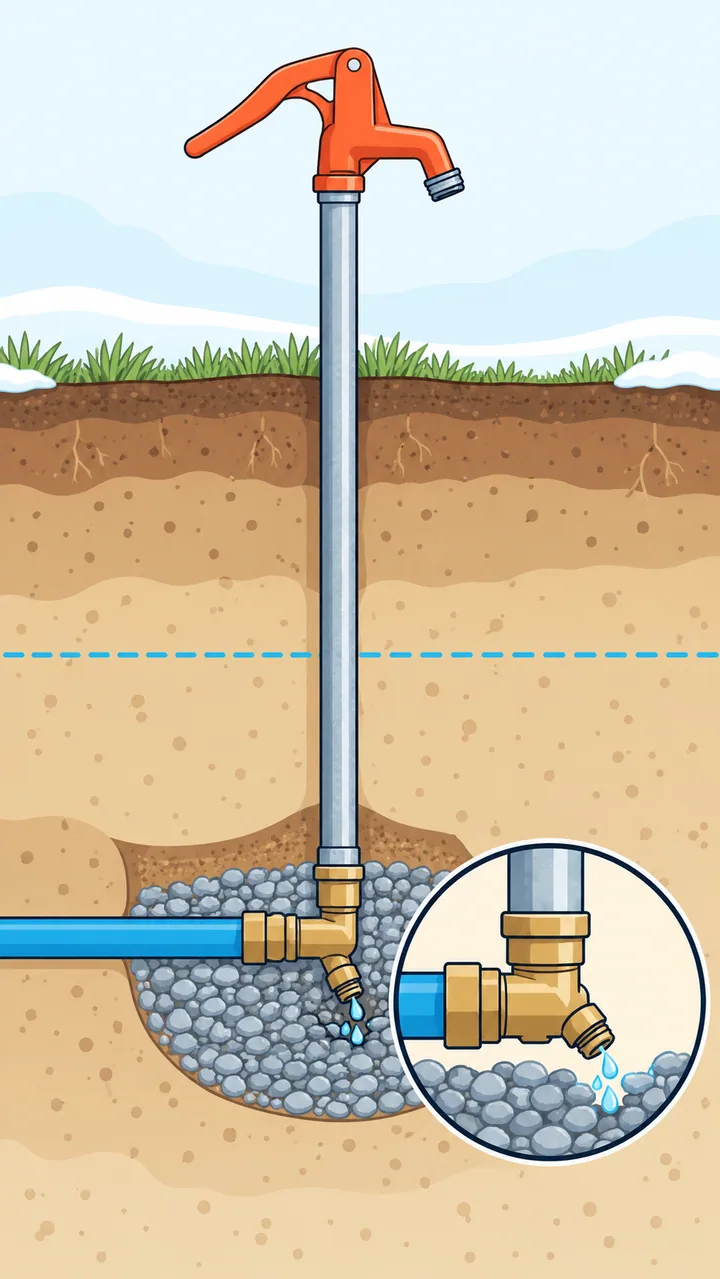
Bury a frost-free hydrant so its valve sits at least 12 inches below the deepest frost line in your area. Boshart’s guidance is to err deeper rather than shallower. The hydrant closes its valve underground and drains the pipe above it into gravel, so a valve above the frost line will freeze.
Take your frost depth from your code. Look up your frost line depth and add 12 inches. Then choose the next hydrant length above that number.
| Local frost line | Bury depth needed | Hydrant to buy |
|---|---|---|
| 24 in | 36 in | 3 ft bury |
| 30 in | 42 in | 4 ft bury |
| 42 in | 54 in | 5 ft bury |
| 60 in | 72 in | 6 ft bury |
What Does Bury Depth Mean?
Bury depth is the distance from the ground surface down to the hydrant’s valve and drain, and it is how yard hydrants are sold. A 4 ft bury hydrant puts its valve about 4 feet underground. The part above ground, the spout height, is separate.
Pick the bury depth from your frost line, not from the spout height you want. Boshart also notes that a hydrant near a driveway needs a longer bury depth, because frost penetrates deeper there. The valve body must be below the worst-case frost level.
How Do You Install a Frost-Free Hydrant?
Dig, support the hydrant, flush the line, build the drain bed, test, then backfill.
- Call 811 before you dig.
- Dig a hole about 2 feet across and deeper than the bury depth.
- Place the hydrant on a cinder block or other heavy support, so its weight does not stress the supply line.
- Flush the supply line before connecting. Debris can jam the mechanism or clog the ports.
- Connect with bronze fittings. Boshart says never to use yellow brass below ground, only quality bronze alloys with over 80 percent copper and under 15 percent zinc.
- Fill the drain bed. Woodford calls for ½ inch gravel around and below the hydrant, to at least 3 inches above the brass drain valve body. Alberta Agriculture says at least one cubic yard of clean, coarse gravel should surround the stop-and-drain valve.
- Keep the drain hole below the frost line.
- Test it before you backfill, and check the connections for leaks.
Do Yard Hydrants Need Backflow Protection?
A yard hydrant with a hose connection usually needs backflow protection, because a hose lying in a bucket or a pond can siphon back into the water supply. The device and the rule are local, so ask your plumbing inspector or water utility.
Many hydrants accept a hose-connection vacuum breaker, or you can install one on the hose end. Check your manufacturer’s instructions.
Why Do Frost-Free Hydrants Still Freeze?
A frost-free hydrant still freezes when it cannot drain. Leaving a hose attached holds water in the standpipe, so the water that should drain stays and freezes. A drain bed that is clogged with soil, or a drain hole above the frost line, does the same.
Disconnect hoses in fall and make sure the hydrant drains after each use. Check the drain bed if water lingers. See insulating buried water lines for protecting the supply line.
Questions People Ask
How long is a 4 ft bury hydrant?
A 4 ft bury hydrant puts its valve about 4 feet below grade, so the pipe below ground is 4 feet long, plus the part above ground that sets spout height. The bury depth is the distance from grade to the valve or drain, not the total length.
How do I choose the right bury depth?
Take your local frost line depth and add 12 inches, then pick the next hydrant bury depth up. A 42 inch frost line plus 12 inches is 54 inches, so a 5 ft hydrant. Near a driveway frost goes deeper, so go longer there.
How do you plumb a frost-free hydrant?
Flush the supply line, set the hydrant on a block, connect the supply with bronze fittings, surround the base with drain gravel, test it before you backfill, and keep the drain hole below the frost line.
What Is Your Frost Line Depth?
Enter a ZIP code or city to see the depth your own building code sets.