
How Does Clay Soil Affect Frost Depth?
Wet clay often freezes less deeply than dry sand or gravel, yet it can still heave and lift posts, slabs and shallow footings. Silt is the soil most prone to heave, with clay behind it. This page explains why, what swelling clay has to do with it, and what it means for footings, fence posts and drainage.
- Checked October 2026
- 4 sources
- How we verify
- Code frost lineSame for any soilThe jurisdiction sets one depth.
- Clay heave rateSlower than siltLow permeability limits water supply.
- Swelling clayDifferent mechanismWater uptake, no freezing required.
Does Clay Soil Change the Frost Depth?
Soil affects how far frost goes in a winter, but codes do not set a separate depth for clay. Clay holds a lot of water, and the latent heat of that water slows the freezing front, so it often freezes less deeply than dry coarse soil. Still, a footing in clay follows the same code frost line as any other soil in your jurisdiction.
Why Does Clay Heave?
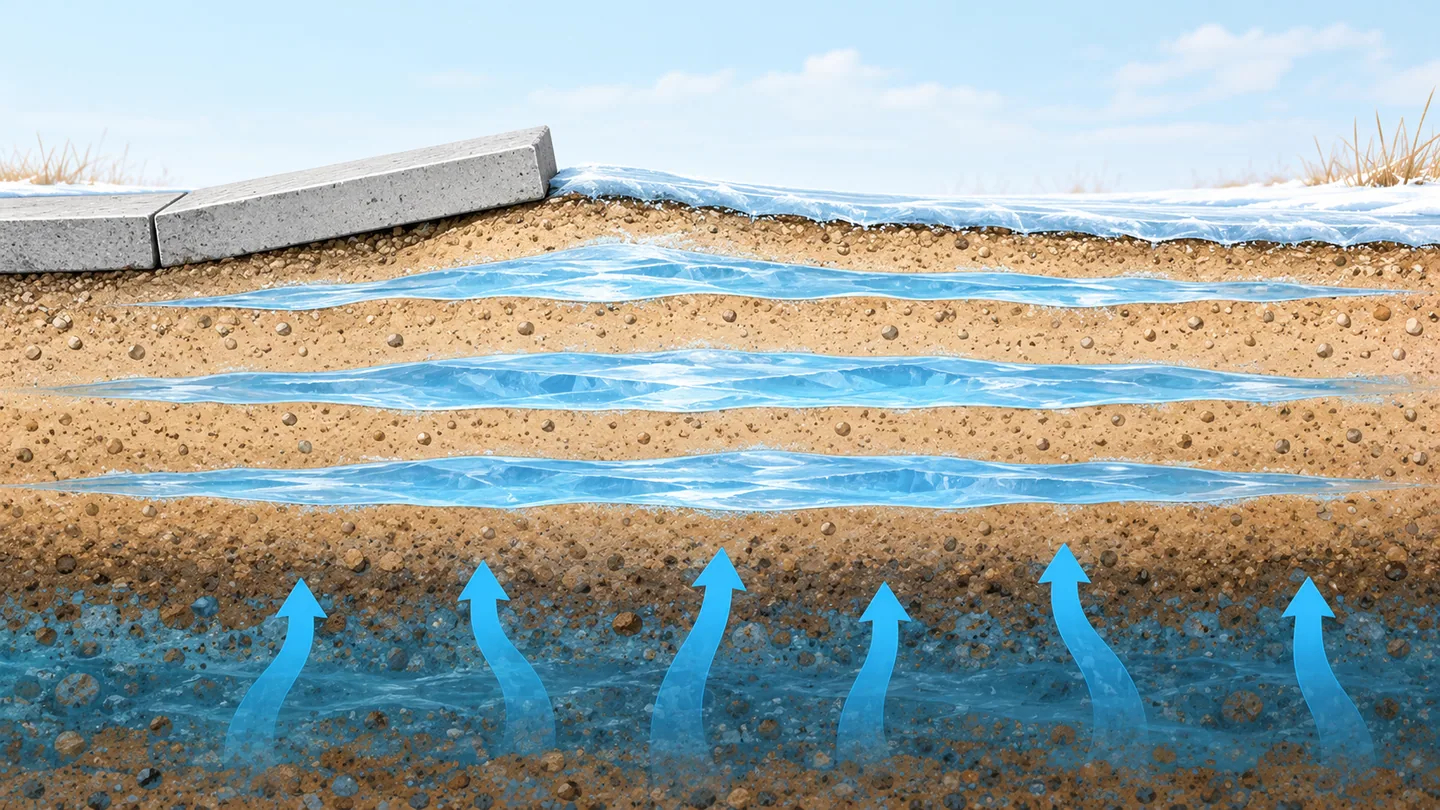
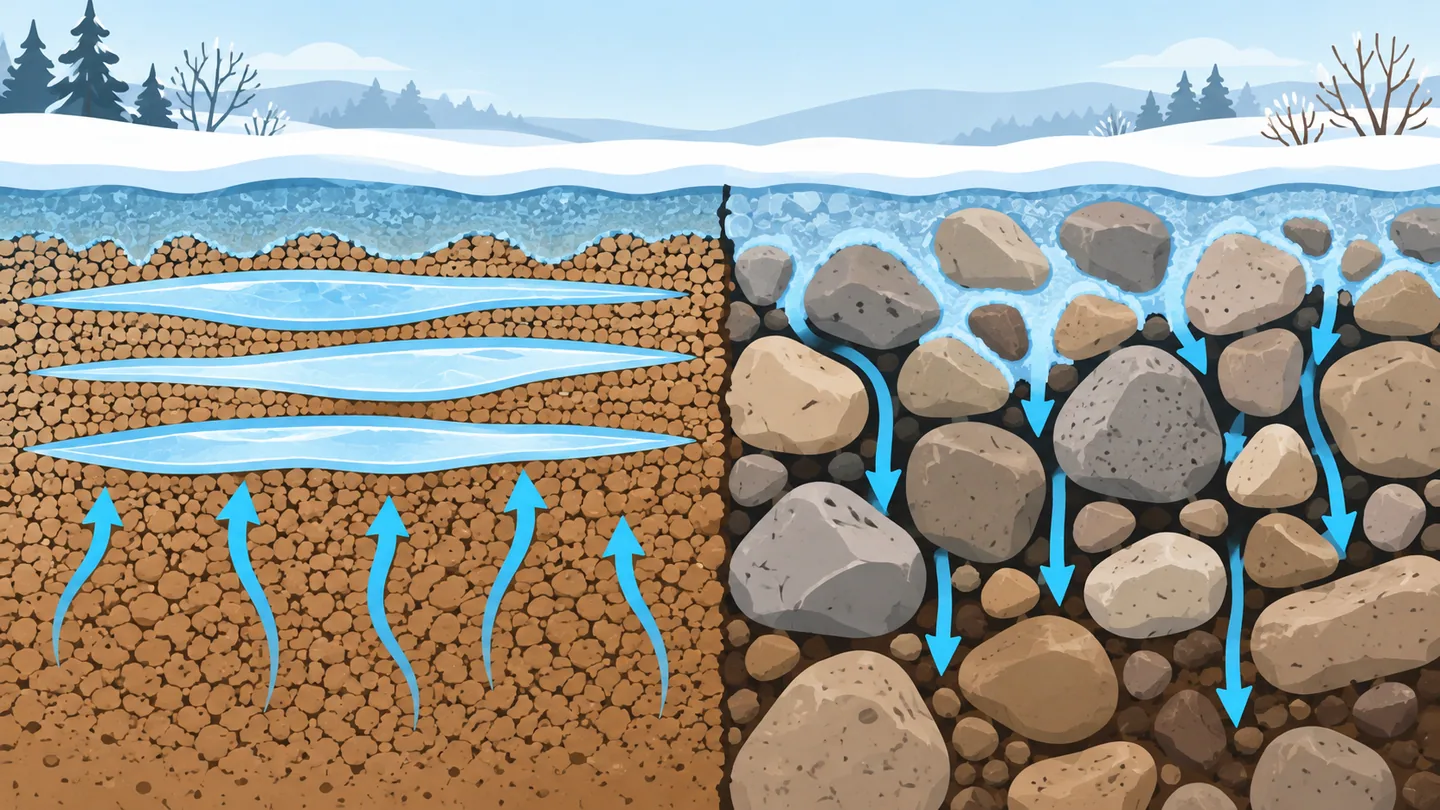
Fine soils pull in water as they freeze, and the water collects as ice lenses. Clay has very low permeability, so water reaches the freezing front slowly, and clay often heaves more slowly than silt. Gradation tests rate clay as less frost-susceptible for that reason, yet clay is also known to heave in practice and mineralogy matters. Where tests are critical, actual frost heave tests are used.
How Is Frost Susceptibility Tested?
Engineers rate it mainly by how many fine particles a soil has, though clay does not always fit the rule.
| Test | Frost-susceptible when | Source |
|---|---|---|
| Fines by sieve | 10% or more passes the 0.075 mm (No. 200) sieve | Common agency rule (Pavement Interactive) |
| Very fine particles | 3% or more finer than 0.02 mm | Common agency rule |
| Clay exception | Gradation can understate clay; heave tests may be needed | Frontiers in Built Environment review |
What Is Your Soil’s Frost-Action Rating?
The USDA soil survey rates soil map units for frost action. Find yours through the Web Soil Survey by drawing an area on your property. Treat the rating as a guide, not a design value. Also see the frost heave page.
How Deep Should Deck Footings and Fence Posts Go in Clay?
To the code frost line, measured to the bottom of the footing. Clay does not let you dig less. A few practices help:
- Keep water away from the footing with grading and gutters downspout extensions.
- Backfill around posts with clean gravel so the frozen clay does not grip the post.
- Do not let the footing bear on frozen or soft soil.
See deck footing depth and fence post depth.
How Does Drainage Reduce Frost Problems in Clay?
Frost heave needs water, so drainage attacks one of the three conditions. Slope the ground away from the structure, drain roof water away, and place free-draining material around footings. Wet clay stays wet longer than sandy soil, so drainage matters more.
Is Expansive Clay the Same Problem as Frost Heave?
| Expansive clay swelling | Frost heave | |
|---|---|---|
| Cause | Clay minerals take in water | Water freezes into ice lenses |
| Needs freezing | No | Yes |
| When | Wet seasons, any temperature | Winter |
| Typical fix | Moisture control, engineered foundation | Depth below frost line, drainage, insulation |
No. Expansive clays such as smectite swell when they take in water, which needs no freezing. Frost heave comes from ice lenses. The two can combine when wet expansive clay freezes, and they respond to different fixes, so a geotechnical report is the way to know which one your site has.
Questions People Ask
Does clay soil change the frost depth?
Soil changes how deep frost goes in a given winter, but building codes use one frost line per jurisdiction, not one per soil type. Dig to the code depth in clay.
Is clay or sand worse for frost heave?
Neither is the worst. Silt is the classic problem soil. Clay can heave but often more slowly, and clean sand and gravel resist it.
Is expansive clay the same as frost heave?
No. Expansive clay swells when it absorbs water and needs no freezing. Frost heave comes from ice forming in the ground. Wet expansive clay in a cold climate can suffer both.
What Is Your Frost Line Depth?
Enter a ZIP code or city to see the depth your own building code sets.